
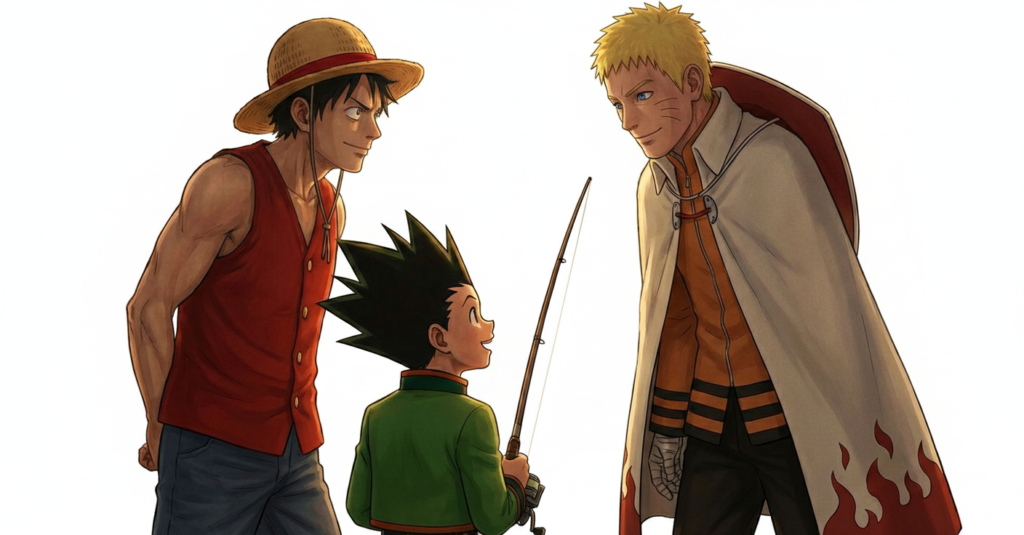
For decades, the global manga and anime conversation has been dominated by the trinity of One Piece, Naruto, and, for a time, Bleach—collectively known as the “Big Three.” These series defined an entire generation of shonen action. Yet, lurking just outside this spotlight is a series often cited by critics and fans as the superior narrative achievement: Yoshihiro Togashi’s Hunter x Hunter (HxH).
The undeniable truth is that Hunter x Hunter possessed the raw, deconstructive genius and narrative depth to not only stand alongside the Big Three but potentially surpass them in critical acclaim and global influence. Its tragic pattern of hiatuses, however, meant that the constant threat it posed was removed, allowing its peers an uninterrupted, two-decade reign.
The Case for Potential: Why HxH Was a Challenger
Hunter x Hunter was, from its inception, a challenger to shonen norms. While One Piece perfected the adventure epic and Naruto mastered the underdog narrative, HxH offered a level of maturity and complexity that set it apart.
1. Nen: The Perfect Power System
The Nen power system is arguably the most brilliant aspect of Hunter x Hunter and its strongest claim to narrative superiority. Unlike the relatively straightforward mechanics of Devil Fruits or Chakra, Nen is complex, requiring creativity, strict limitations, and psychological warfare. It forces characters to use their brains rather than just their brawn, leading to battles that feel more like chess matches than brawls. This versatility and depth provided an almost infinite well of compelling story and character development, something often diluted in longer-running shonen.
2. Deconstruction and Moral Ambiguity
While Luffy and Naruto are unwavering moral compasses, Hunter x Hunter thrives in moral gray areas. Protagonists like Gon and Killua undergo significant, and sometimes horrifying, psychological evolution. The Chimera Ant arc, a magnum opus of modern fiction, deconstructs the entire shonen concept of heroism, forcing the main characters into situations that permanently scar their innocence. The final transformation of Gon, driven by rage and self-destruction, is a powerful moment that few mainstream shonen series would dare to touch. This mature thematic landscape elevated HxH above simple adventure.
3. World-Building and Narrative Pacing
Togashi, the creator, is a master of efficient storytelling. The world of HxH is vast and intricate—filled with political intrigue, dangerous exploration, and layered organizations—but its arcs are tight, focused, and always conclude definitively. While One Piece and Naruto have legendary pacing issues, HxH moved swiftly, introducing new concepts, developing characters, and paying off foreshadowing at a relentless, yet satisfying, rate.
The Hiatus: The Stoppage That Cleared the Path
The potential of Hunter x Hunter was never fully realized due to the frequent and sometimes years-long hiatuses stemming from Togashi’s chronic health issues.
Weekly manga publishing is a demanding, continuous marathon, and sustained popularity relies heavily on consistent weekly presence. Manga sales, anime ratings, and merchandise all feed off this continuous stream of content.
- The Loss of Momentum: Every time Hunter x Hunter took a break, it lost narrative momentum and market presence. For casual fans, it became too difficult to follow.
- The Big Three’s Consistency: During HxH’s downtime, One Piece and Naruto ran like clockwork. They were always there, always advancing their narratives, and always driving the conversation in Weekly Shōnen Jump.
How the Hiatus Benefited One Piece and Naruto
The absence of a continuous, high-quality rival like Hunter x Hunter proved to be an enormous boon for the mainstream success of One Piece and Naruto.
1. Solidifying the “Big Three” Narrative
The term “Big Three” was a construct used to define the leading shonen titles of the era. If Hunter x Hunter had maintained a consistent schedule, it would have, based on critical reception, easily belonged in this top tier, likely pushing either Bleach (which suffered its own consistency issues later) or even, arguably, Naruto out of the primary spotlight. The HxH hiatus simplified the competitive landscape, creating a clear, undisputed hierarchy where One Piece and Naruto could dominate.
2. Reduced Creative Pressure
The high narrative bar set by Togashi’s work—particularly in Nen and his character writing—could have exerted continuous pressure on Eiichiro Oda and Masashi Kishimoto. Togashi’s willingness to make radical narrative choices, like permanently sidelining his main protagonist or having the villain succeed in chilling ways, was constantly redefining what a shonen manga could be.
Without HxH’s continuous innovation breathing down their necks, Oda and Kishimoto were free to maintain their established styles and pacing without the immediate competitive need to match HxH’s thematic complexity or sophisticated power system. This allowed them to build their massive fanbases steadily and without distraction.
3. Undivided Market Share
When a hit manga stops publishing, its merchandise sales, anime syndication slots, and critical discussion space are all ceded to its competitors. One Piece and Naruto captured this vacuum. Every fan who wanted a complex, ongoing shonen story found their options narrowed down, ultimately driving sales and media attention to the reliably available works.
A Legacy of “What If”
Hunter x Hunter remains a critical darling—a beloved work that delivers brilliance with every sporadic chapter. But its irregular release schedule relegated it from being a frontrunner to being the eternal “what if” of the shonen world.
While One Piece and Naruto earned their legendary status through massive scale, consistent world-building, and dedication, Hunter x Hunter’s stoppage was an essential, if accidental, part of their narrative. Its removal ensured their stories could unfold without the immediate, disruptive pressure of a contemporary masterpiece that played by entirely different, and arguably deeper, rules. The crown of the shonen generation belongs to those who finished the race, but the phantom contender who set the record pace in practice will forever be remembered.